Allen Morrison
|
pc = postcard; col. = collection; AM = the author |
||||||||||||||||||||||||||||||
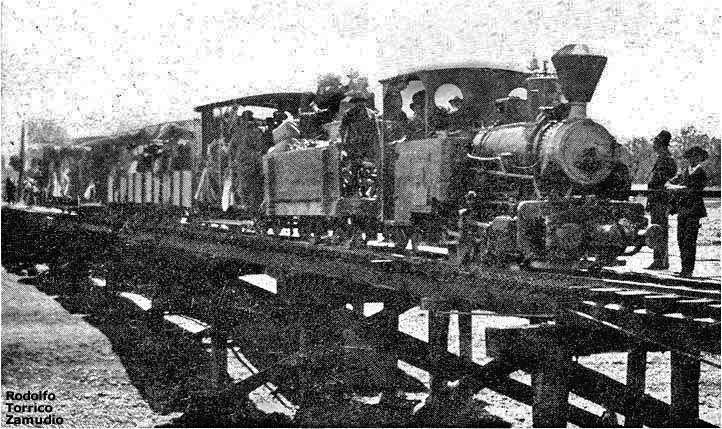
The motive power for the train above was probably this steam locomotive acquired from Borsig-Werke in Berlin in 1905. It served the Quillacollo-Vinto line until the electric locomotives arrived in 1910. [Rodolfo Torrico Zamudio, col. Renato Crespo]
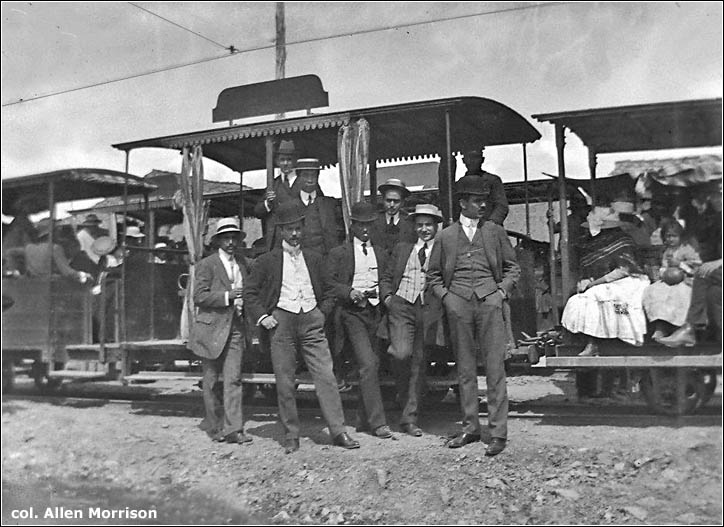
These are probably executives and engineers of the Empresa de Luz y Fuerza Eléctrica ("ELFE"), which electrified the Vinto line. [col. AM]
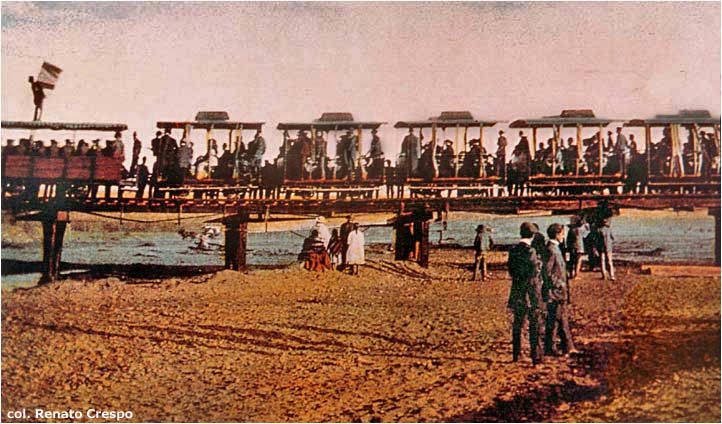
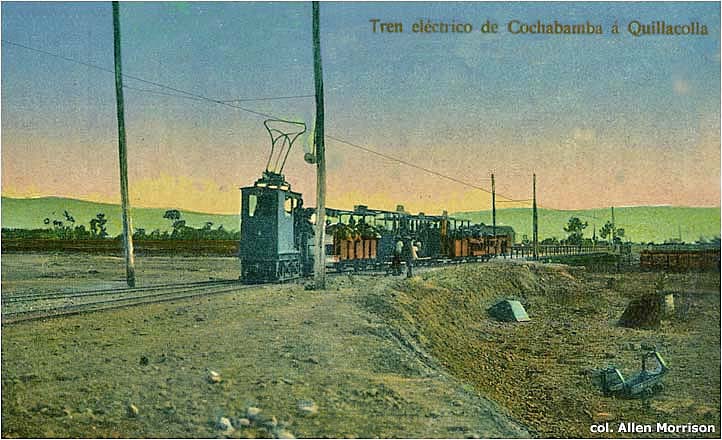
This electric train has just crossed the Río Rocha on the Quillacollo (not Quillacolla) interurban line [see map]. The little electric locomotive was probably built by the Arthur Koppel Co. in Berlin. [pc, col. AM]
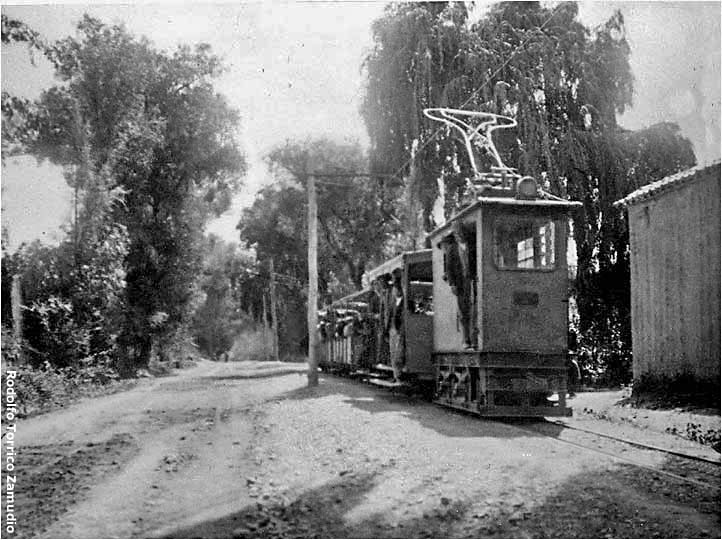
Another view of the Quillacollo line [see map]. [Rodolfo Torrico Zamudio, col. Renato Crespo]
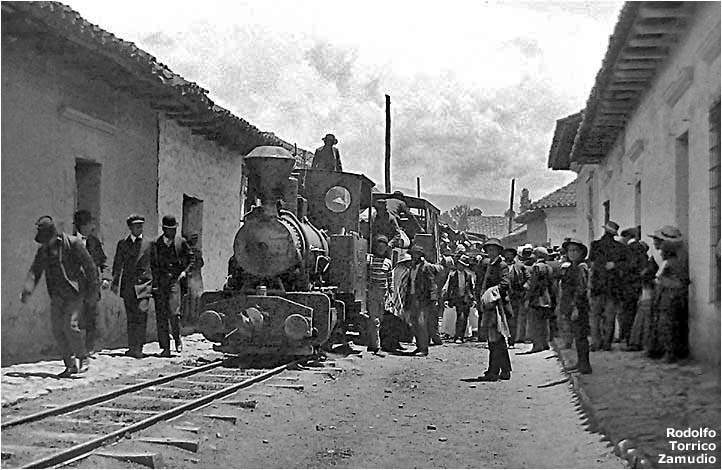
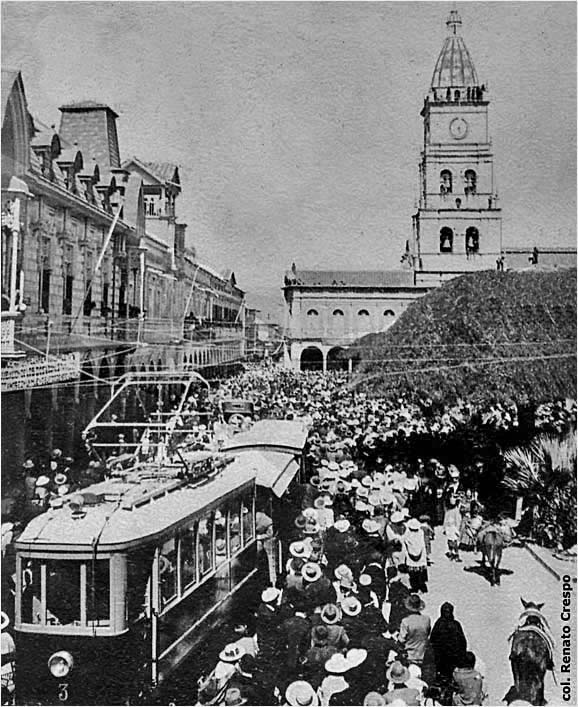
An electric train on Plaza 14 de Septiembre in downtown Cochabamba [see map]. Track gauge is 750 mm / 29 1/2 in. [Rodolfo Torrico Zamudio, col. Renato Crespo]
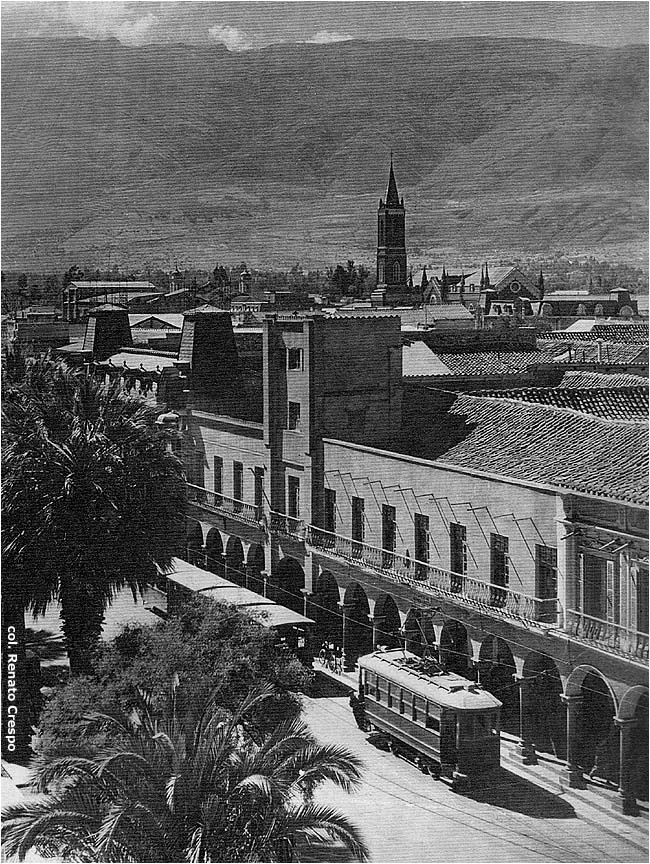
The view south along the east side of Plaza 14 de Septiembre [see map]. One of the passenger motor cars that Empresa de Luz y Fuerza Eléctrica ("ELFE") de Cochabamba purchased in 1914 from Maschinenfabrik Augsburg-Nürnberg ("MAN") in Germany. At least five trailers follow. [pc, col. AM]
An engraving shows a Quillacollo train reversing direction at Plaza 14 de Septiembre [see map]. The motor car has released its trailers, will come forward, then return on the other track past the trailers, then reverse and reconnect them at the other end. [col. Renato Crespo]
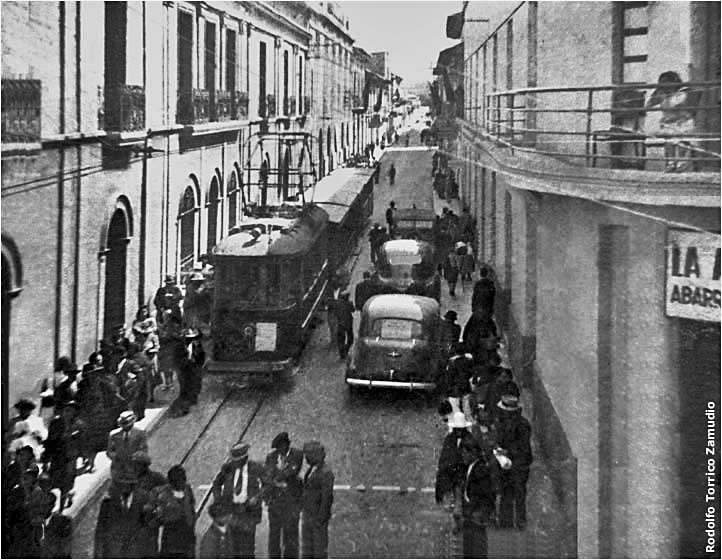
One of the MAN cars with five trailers on Avenida España. View is north from Plaza 14 de Septiembre [see map]. [Rodolfo Torrico Zamudio, col. Renato Crespo]
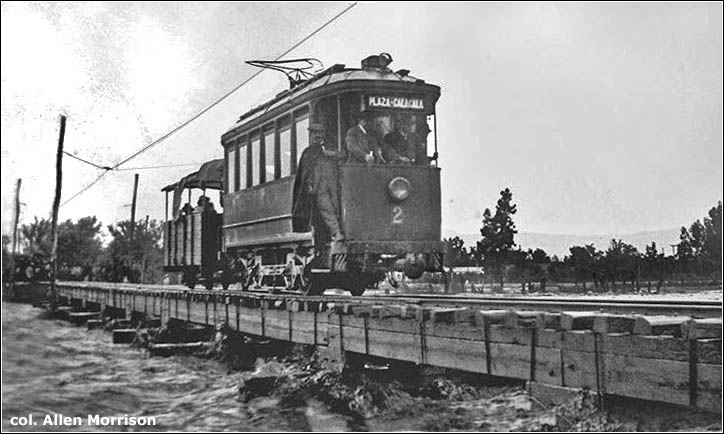
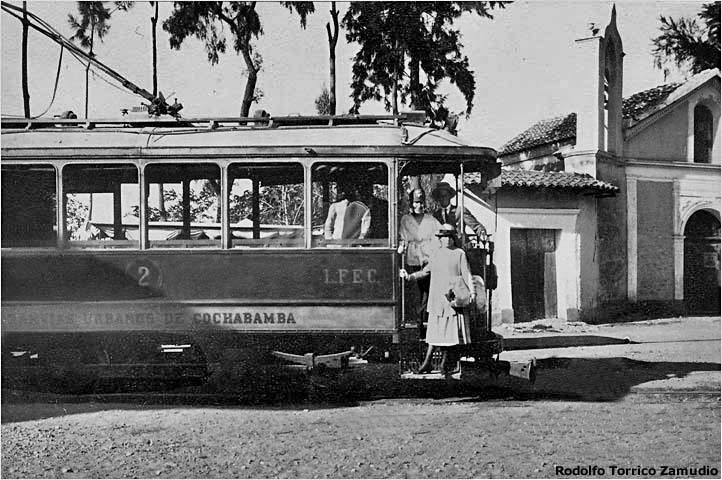
MAN tram 2 and trailer on the Río Rocha bridge that leads to Cala Cala [see map]. [Rodolfo Torrico Zamudio, col. Renato Crespo]
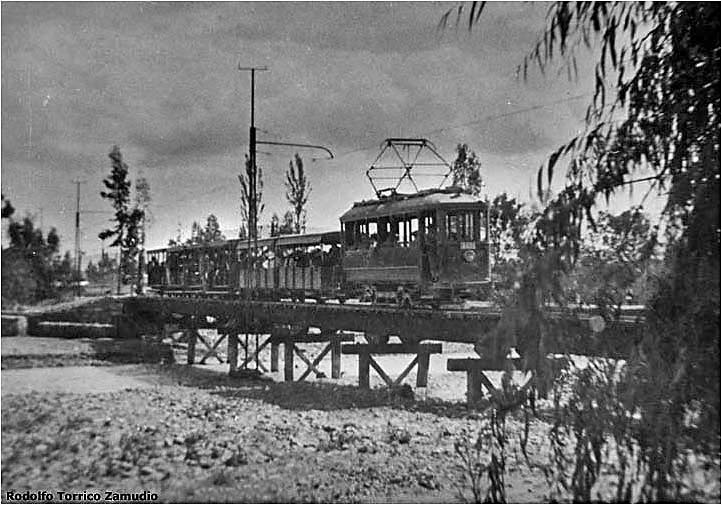
A MAN tram and several trailers on the same bridge – or is it the Vinto bridge? [Rodolfo Torrico Zamudio, col. Renato Crespo]
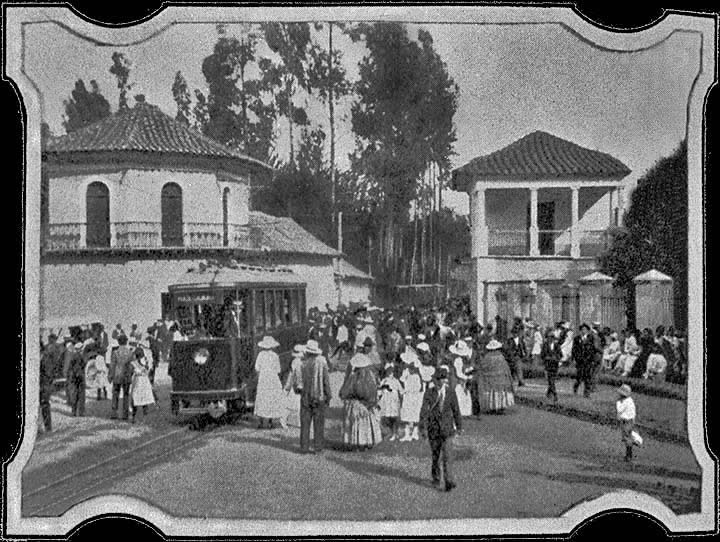
The arrival of a tram at the park in Cala Cala was always a welcome sight [see map]. [Rodolfo Torrico Zamudio]
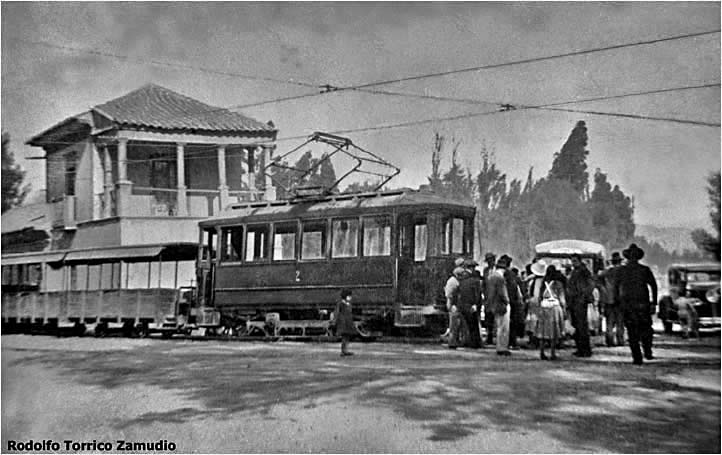
MAN tram 2 again at Cala Cala. [Rodolfo Torrico Zamudio, col. Renato Crespo]
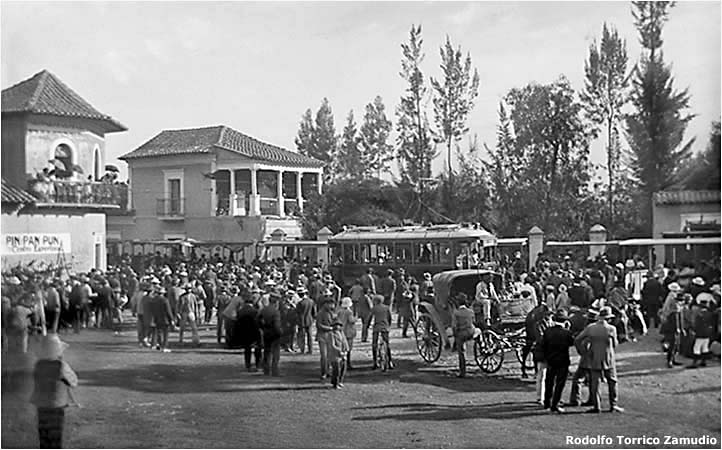
Several tram trains meet at Cala Cala [see map]. [Rodolfo Torrico Zamudio. Fundación Torrico Zamudio]
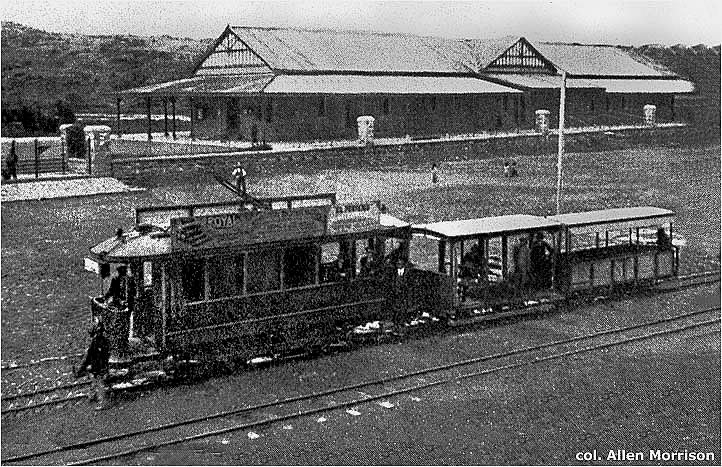
A MAN tram with two trailers in front of the Bolivian Railway's new passenger station at Plaza San Sebastián [see map]. The structure is still there today. [Alarcón, Bolivia, p. 568: see BIBLIOGRAPHY]
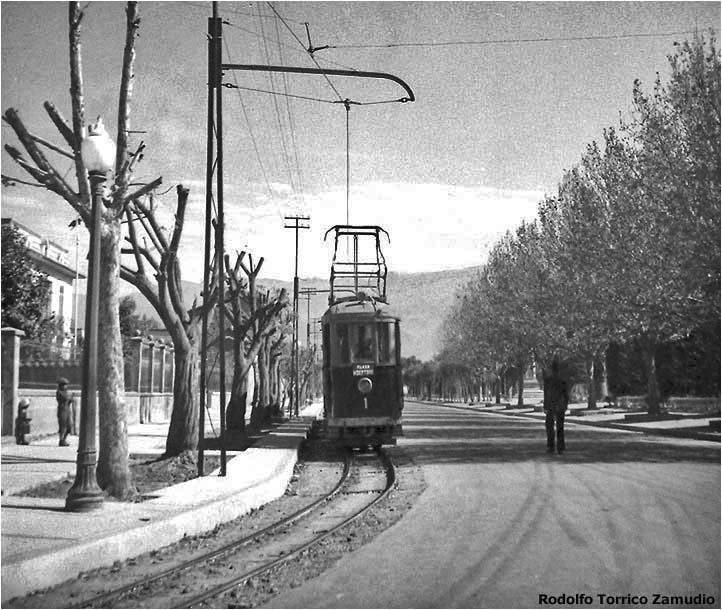
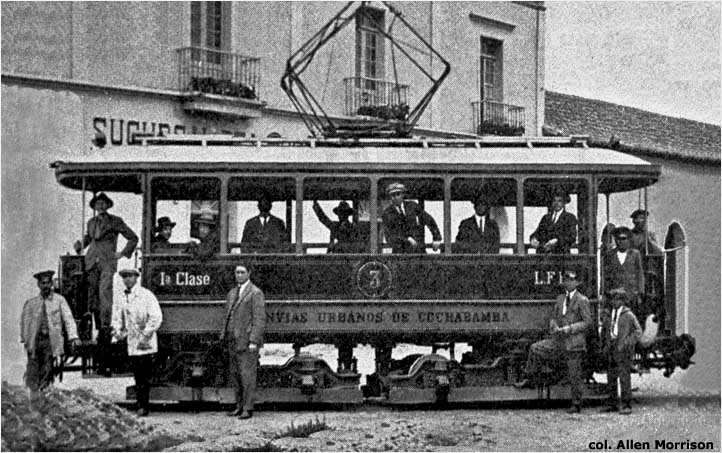
MAN tram number 1 at the north end of Avenida España [see map]. One wonders why ELFE liked such narrow cars! Note also the very narrow 750 mm gauge track. [Rodolfo Torrico Zamudio, col. Renato Crespo]
MAN tram 2 at an unidentified location. The woman's black stockings indicate that the photograph was taken in the early 1920s. [Rodolfo Torrico Zamudio, col. Renato Crespo]
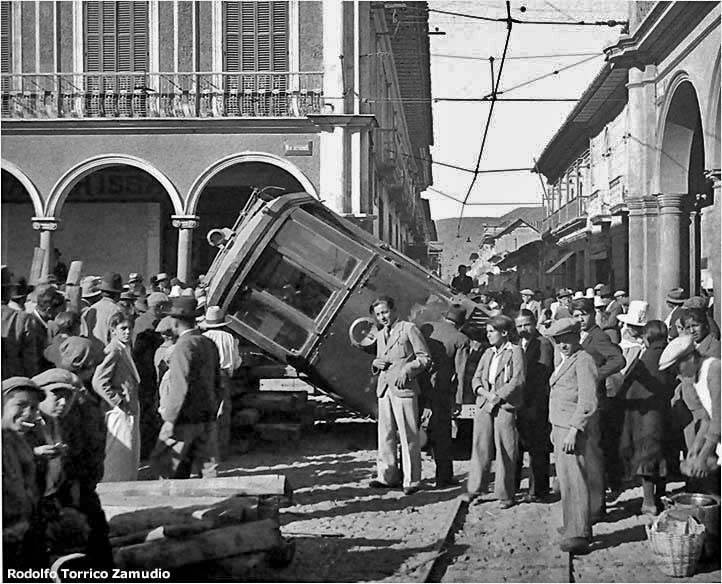
Problems . . . problems . . . [Rodolfo Torrico Zamudio, col. Renato Crespo]
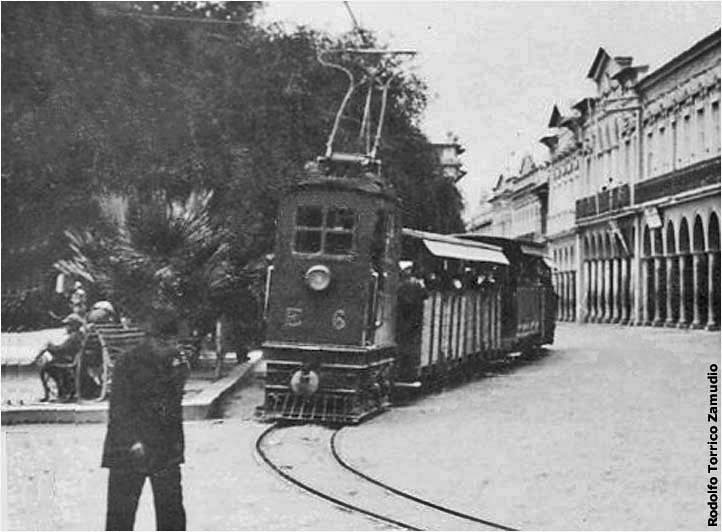
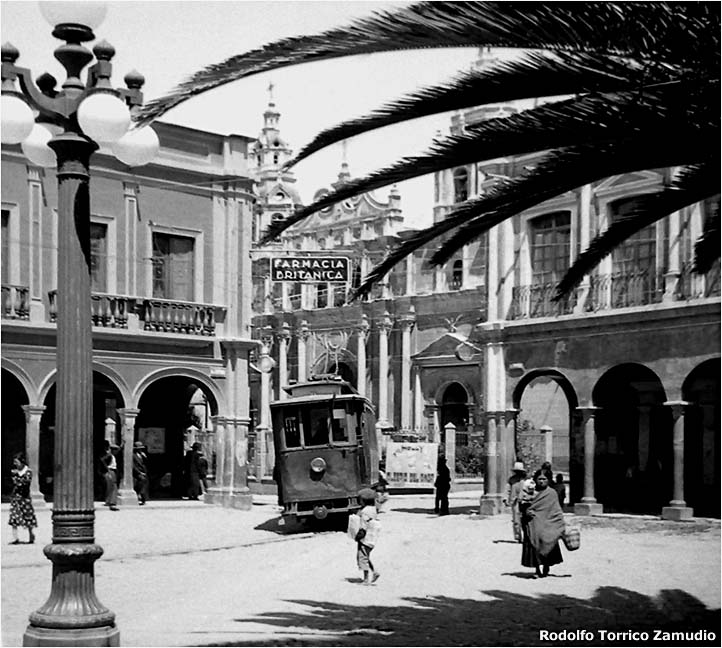
Here is a different type of tram turning onto Plaza 14 de Septiembre [see map]. The three cars of this series were numbered 4, 5 and 6. Their origin is unknown. [Rodolfo Torrico Zamudio, col. Renato Crespo]
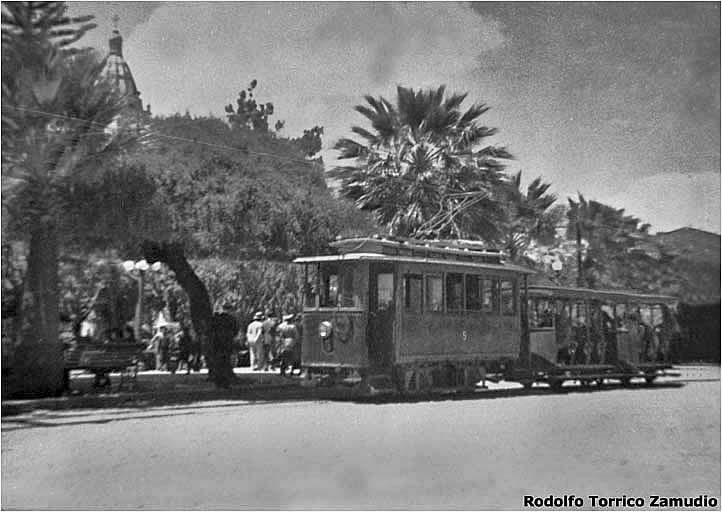
This photograph shows tram number 5 + two trailers on the north side of Plaza 14 de Septiembre [see map]. [Rodolfo Torrico Zamudio]
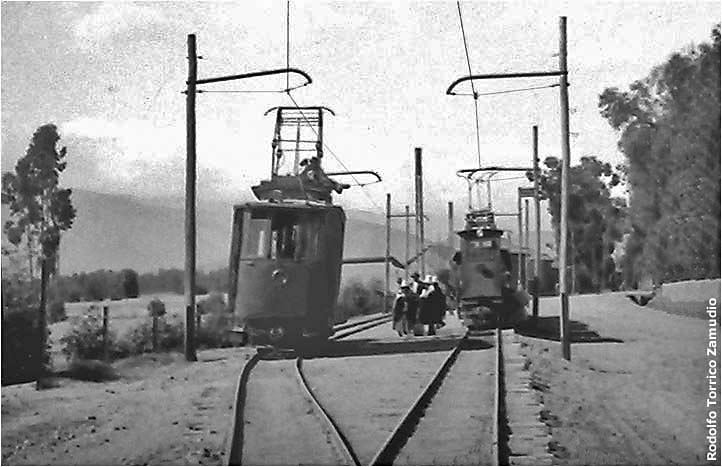
Here is another view of the second tram type, passing a freight train somewhere on the Vinto line [see map]. Are there passengers on the roof of the tram? [Rodolfo Torrico Zamudio, col. Renato Crespo]
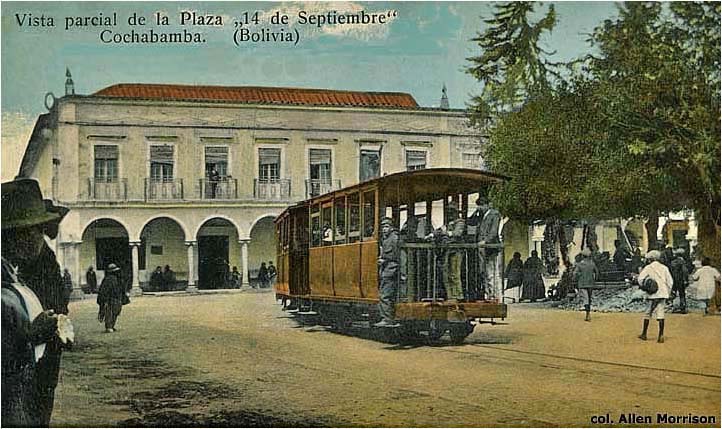
A postcard mailed from La Paz to Chicago in 1919 shows a steam-powered tram train on the north side of Plaza 14 de Septiembre. The view is east. [col. AM]
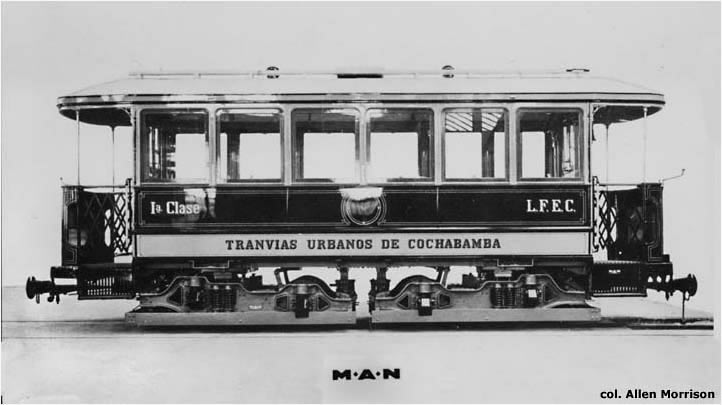
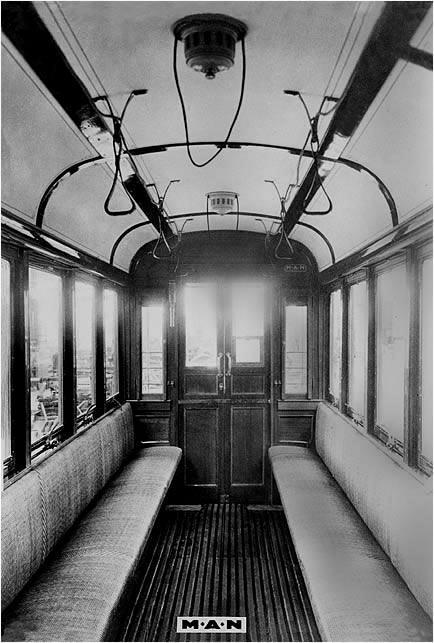
A MAN photograph, taken in Germany, of double-truck tram 3 that it built for Cochabamba in 1924. [MAN, col. AM]
Interior of the vehicle shown in the previous picture. [MAN, col. AM]
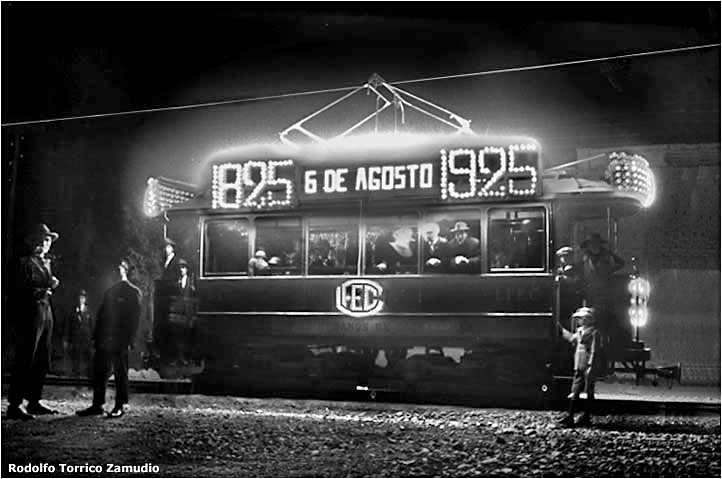
MAN tram 3 at its dedication in Cochabamba in 1925. [Alarcón, Bolivia, p. 984]
In 1925 the Cochabamba trams celebrated the centenary of the establishment of the Republic of Bolivia on 6 August 1825. The initials "LFEC" identified Luz (y) Fuerza Eléctrica de Cochabamba. [Rodolfo Torrico Zamudio. Fundación Torrico Zamudio]
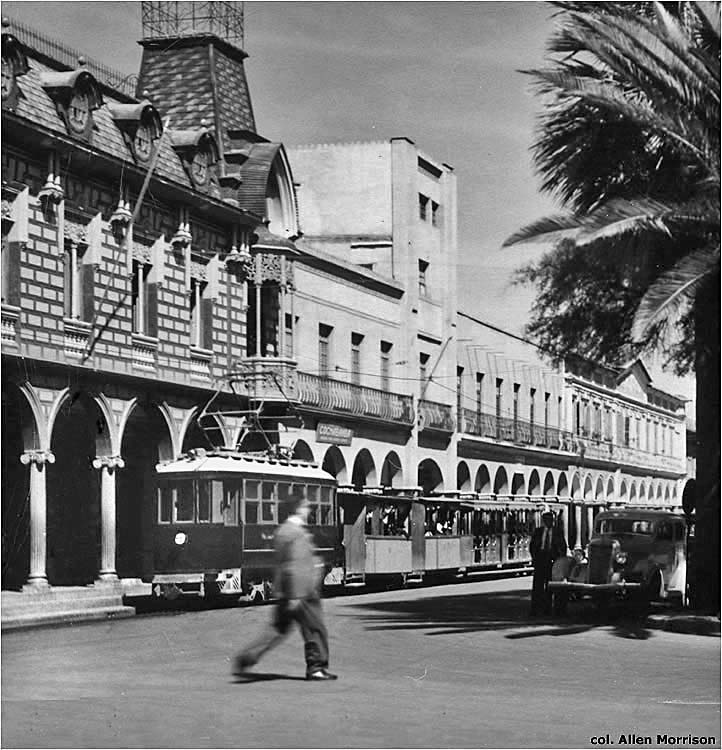
Cochabamba cathedral on Plaza 14 de Septiembre [see map] in 1940. View is toward the south, with the park on the right. This is the only photograph on this page that shows 8-wheel tram 3 in operation. [col. Renato Crespo]
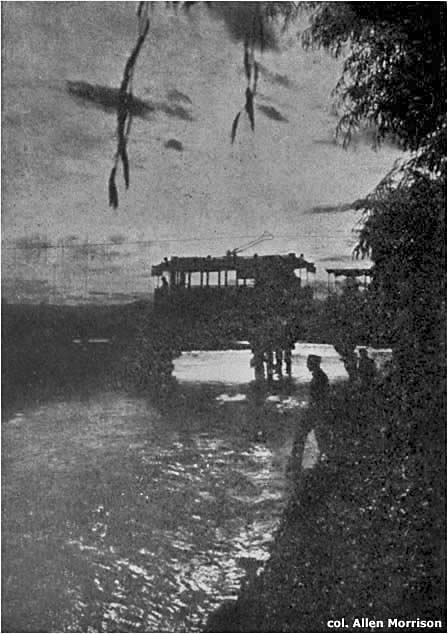
The Río Rocha at twilight. Are the men fishing? [col. AM]
The ELFE logo reproduced – this size – on a webpage that presents a brief history of the company.
Note: Getty Images in California owns a beautiful photograph of Cochabamba tram 3 (+ trailers), but wants $300 for permission to reproduce it on this page. Since the author does not like to encourage extortion, he cannot show it here. Enter "Bolivian Street Car" in its search window. |
Versión en español de esta página
See more photographs by Rodolfo Torrico Zamudio
Return to the Cochabamba text page
See Cochabamba map
Copyright © 2005-2105 Allen Morrison
ALL RIGHTS RESERVED
TODOS LOS DERECHOS RESERVADOS